Rust solo survival on official servers rewards patience, map knowledge and a well-placed mannequin more than raw PvP skill
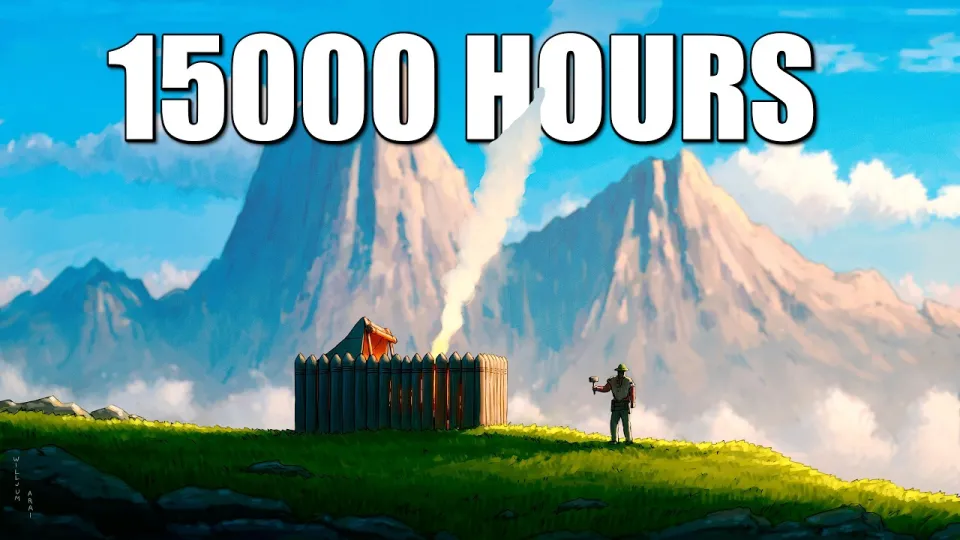
Video: How a solo with 14,782 Hours plays official rust...
Want articles like this for your own video to promote it on YouTube and Google? Order them through the Telegram bot @sat_sit_bot. The bot writes and publishes the articles itself (with your YouTube video embedded) on popular topical websites (no ads). Your first 50 articles are free.
Key takeaways
- The featured solo account carries 14,782 hours of Rust playtime, roughly 1,180 hours per year if spread across the game's full lifespan.
- The run is played on official vanilla servers, where there are no boosted gather rates and no team size cap.
- The base in the video is a build credited to the creator Luca Builds, with a mannequin placed in a window as a decoy.
- A candle hat is crafted early for visibility while building, then barely used again.
- The player repeatedly crafts nail guns while claiming he prefers not to spend scrap on weapons.
Rust solo survival on official servers is mostly a discipline problem, not an aim problem: you pick a quiet base spot, keep your footprint small, spend scrap on workbenches before weapons, and treat every fight you can avoid as a win. A 14,782-hour solo run shows that pattern clearly — the hours go into map reading, base positioning and knowing when to log off rather than into flick shots. Sponsorship support for the video comes through Manscaped's site, where the code WILLJUM15 takes 15% off plus free shipping.
What 14,782 hours of Rust actually buys a solo player
Hour count in Rust is a proxy for pattern recognition, not reflexes. A player with that much time has already lost every common fight type dozens of times, so the decisions happen earlier: which monument to avoid on wipe day, which side of the map gets less traffic, when a raid is likely to come.
Break the number down and it stops looking mythical. Spread over the game's lifespan since early access, 14,782 hours works out to roughly 1,180 hours a year — about the load of a part-time job. Compressed into a shorter period after full release it climbs toward 1,800–1,850 hours annually, close to full-time work. That is the real explanation for the calm decision-making on screen: repetition, not talent.
For a solo on official vanilla, the practical translation is:
- Wipe-day hours are spent on a fast starter base, not on contests over monuments.
- Scrap goes to a workbench and a research table before it goes to guns.
- Every trip out carries a defined goal and a return condition.
- Fights are taken when the odds are lopsided, skipped when they are even.
Base placement and the decoy mannequin trick
The base in the run is a compact solo design credited to the builder Luca Builds, and its best feature is not armor — it is misdirection. A mannequin placed in a window reads as a player silhouette at a distance, so raiders and roaming groups dump ammunition into a prop while the actual defender repositions.
Small-base principles that hold on official servers:
- Footprint over height: a 2x2 with an airlock and stone shell is cheaper to upgrade and less interesting to raid than a tower.
- One entrance, one exit, both airlocked, so a single door camp cannot trap you inside.
- Windows facing the likely approach direction, with the mannequin or a similar prop drawing fire.
- No visible loot room; storage split across the base so one breach does not end the wipe.
- Placement away from the busiest roads and monument paths, even at the cost of longer farming runs.
A candle hat shows up early as a building light so the player can see what he is placing after dark. It is a small detail that matters on official servers: lighting your own base during construction is fine, lighting it while carrying loot is not.
Scrap discipline and the nail gun paradox
The most repeated contradiction in solo Rust is the player who says he does not spend scrap on weapons while crafting his twenty-eighth nail gun of the wipe. It is funny, but it is also correct economics. A nail gun costs almost nothing, uses cheap ammo, and is good enough to finish a wounded opponent or defend a door.
A workable scrap order for a solo on vanilla:
- Workbench level 1 and a research table.
- A tier-one firearm you can actually replace — revolver, crossbow or nail gun.
- Workbench level 2 once the base is stone and the loot is split.
- Blueprints for the tools you lose most often, so replacements cost materials instead of scrap.
- Only then save toward tier-two weapons and armor.
Expensive kits are a solo trap. Losing a cheap kit costs a few minutes; losing a crafted rifle and metal armor costs an evening.
The fights a solo should take and the ones to walk away from
A solo wins on official servers by choosing lopsided engagements, and the video's own best moments follow that rule: jumping a pair of players who are distracted, or holding an angle from inside a base rather than pushing open ground. What looks like confidence is usually arithmetic — numbers, cover, and who has something to lose.
Signals to disengage:
- You hear more than one set of footsteps and you have not been spotted.
- The opponent has a clear line of retreat toward a group base.
- You are carrying more scrap than you are willing to lose.
- The sun or terrain puts you in silhouette.
Signals to commit: a lone player looting a crate, an opponent already damaged, or a fight directly outside your own door where you control the airlock.
What viewers keep asking about high-hour Rust accounts
Three doubts come up again and again under long solo videos, and each has a plain answer.
Is the hour count real? Yes and no. Steam counts every hour the game is running, including time spent logged in and idle, so a chunk of any very high total is not active play. The decision-making on screen still comes from thousands of genuine hours, but nobody should read 14,782 as 14,782 hours of combat.
Why does a player who hears footsteps from far away get surprised by a bear? Because audio priority is trained, not universal. Players filter for player-made sounds and tune out ambient wildlife, which is exactly how a bear ends up behind you at a monument.
Does the peaceful farmer persona hold up? Not really, and the audience knows it. Long-form Rust content sells a relaxed tone, but the same player takes fights a new player would never survive. The persona is presentation; the PvP is real.
Why long-form solo Rust keeps an audience that never plays the game
A large share of the audience for these videos has no intention of installing Rust. They watch for the structure: a wipe has a beginning, a middle and an end, and a solo run compresses that into a single narrative with real stakes and no respawns that matter.
That is also why official vanilla matters more than modded servers for this format. Boosted gather rates shorten the arc; a solo on official rates has to earn every workbench, and the tension of carrying scrap home is genuine. The calm commentary and the music selection do the rest, turning a survival grind into something closer to a documentary.
Useful links from the video
- Manscaped offer page with the WILLJUM15 code: https://manscaped.com/willjum
- Willjum on Patreon: https://www.patreon.com/Willjum
- Willjum on Twitch: https://www.twitch.tv/willjum
- Willjum on Twitter: https://twitter.com/willjum1
- Creative Commons Attribution 4.0 license text: http://creativecommons.org/licenses/by/4.0/
Final takeaway for anyone trying solo Rust on official servers
Solo Rust on official servers is won before the first fight, through base placement, cheap replaceable kits and a scrap plan that never leaves you without a workbench. The 14,782-hour account in this breakdown is less a flex than a record of repetition: thousands of small decisions about where to build, what to craft and when to walk away. The mannequin in the window and the endless nail guns are the same idea in two forms — spend little, mislead often, and stay in the wipe. Willjum's channel is the source of the full solo run if you want to watch the decisions play out. If the grooming sponsor segment caught your attention, the Manscaped offer page with code WILLJUM15 is where the discount and free shipping are applied.
Questions & answers
Is a 14,782-hour Rust playtime actually possible?
Yes, but it is not all active play. Steam logs every hour the game is running, including time spent logged in and idle, so a large total includes downtime. Spread across the years since early access it works out to roughly 1,180 hours a year, which is comparable to a part-time job rather than something impossible.
Why do high-hour Rust players still get killed by animals or miss obvious sounds?
Experienced players filter audio for player-made noise — footsteps, doors, gunfire — and tune out ambient wildlife, so a bear can close in unnoticed. It is a side effect of trained attention, not a lack of awareness, and it happens to veterans far more often than highlight clips suggest.
What is the best scrap priority for a solo on an official Rust server?
Get a workbench level 1 and a research table first, then a cheap replaceable tier-one weapon such as a revolver, crossbow or nail gun. Move to workbench level 2 only after the base is stone and loot is split, and research the tools you lose most often so replacements cost materials rather than scrap.
Should a solo player fight groups on official servers?
Only when the odds are clearly in your favor — a distracted pair, an already damaged opponent, or a fight right outside your own airlock. Even fights on open ground favor the side with more players and more respawns, so walking away is usually the correct play.
Source: How a solo with 14,782 Hours plays official rust... · Markdown version